

Older, less accessible office blocks are losing ground, while prime Grade A spaces in integrated, transit-connected developments continue to draw tenants.
KUALA LUMPUR: Malaysia’s prime city office market is shifting as rising costs and shifting employee expectations push companies to rethink physical space and leasing strategies.
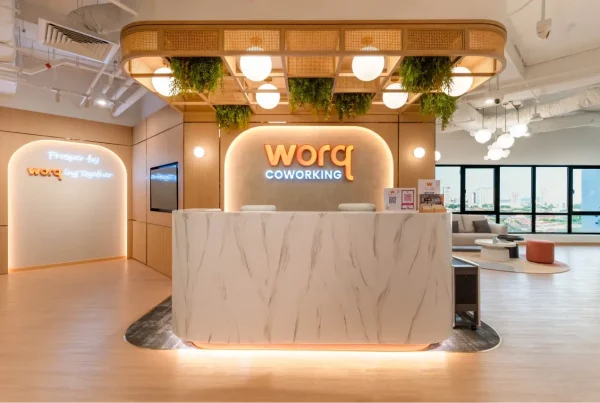
Once dominated by gleaming towers and long-term square-footage leases, the market is now defined by flexibility, connectivity, and employee experience, with transit-oriented coworking hubs (TODs) emerging as the standout growth story. Seamlessly linked to MRT and LRT lines, these hubs offer both convenience and a higher quality of working life.
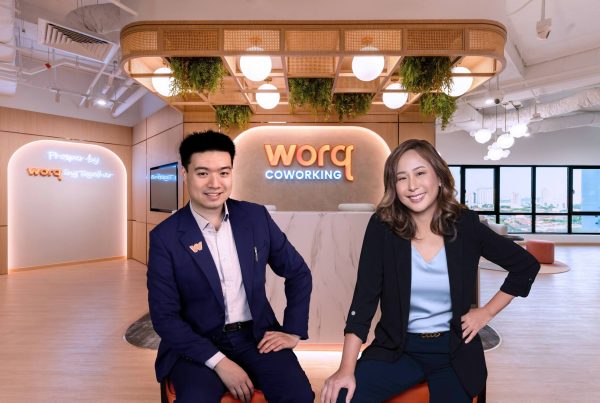
Stephanie Ping, co-founder and chief executive officer of coworking operator WORQ, said oversupply and rising vacancies are accelerating the shift, with demand lagging despite new towers entering the market.
Older, less accessible office blocks are losing ground, while prime Grade A spaces in integrated, transit-connected developments continue to draw tenants.
The solution, according to her, lies not in building more towers but in reimagining existing office stock.
“An office glut refers to an oversupply of office spaces that no longer meet the needs of today’s businesses. In Malaysia, this is evident in the large number of new office buildings competing with older ones, resulting in a “flight to quality” among tenants. However, this shift isn’t just about upgrading to newer buildings; it’s about adopting new ways of effectively using space,” she told Business Times.
A market at a crossroads
The scale of the challenge is evident in the Klang Valley. By the fourth quarter of 2024, it had amassed 121.7 million sq ft of supply, with vacancy rates climbing to 28.3 per cent, according to Bank Negara Malaysia’s Financial Stability Review.
Despite persistent vacancy, rents in prime locations are holding steady. Knight Frank Malaysia reported that office occupancy across the Klang Valley saw mixed growth in the first half of 2025, supported by relocations into Grade A buildings within integrated, transit-linked projects.
In Kuala Lumpur’s city centre, occupancy rose to 69.1 per cent, while fringe areas improved to 89.4 per cent. Average rents in Kuala Lumpur city nudged up to RM6.69 per sq ft per month, reflecting tenant preference for Prime A+ stock. Selangor’s decentralised markets also held firm, with occupiers drawn to cost-efficient alternatives outside the capital.
Samuel Tan, founder and chief executive officer of Olive Tree Property Consultants, said Johor Bahru’s office market is entering a new growth phase, fuelled by the Johor–Singapore Special Economic Zone (JS-SEZ) and post-pandemic work trends.
He told Business Times that flexible workspace design, technology integration, sustainability features, strategic location and seamless connectivity are now key considerations for developers and tenants alike.
Purpose-built offices in Johor Bahru must adapt to meet rising demands for flexibility, digital infrastructure and green credentials, Tan said.
The JS-SEZ agreement, he noted, has already spurred a 16 per cent jump in property transactions and a 36 per cent increase in total value across Iskandar Malaysia, signalling renewed investor confidence.
“Purpose-built offices that incorporate hybrid work models, smart technology, and wellness-focused design will be best positioned to attract Singaporean companies and support local businesses in leveraging cross-border opportunities. Our latest report provides strategic guidance for developers, investors, and businesses seeking to capitalise on Johor Bahru’s evolving commercial landscape through innovative office design and functionality.”
Tan said Johor Bahru’s commercial property sector has historically faced challenges with oversupply and stagnant demand, but recent developments indicate a dramatic shift in market dynamics. The JS-SEZ represents a structural realignment in cross-border economic cooperation, promising smoother connectivity, streamlined regulations, and stronger bilateral collaboration.
“This initiative comes at a crucial time when hybrid work models are redefining office space requirements globally, with Malaysia’s relatively young median employee age of 30 creating greater adaptability to shifting workplace trends. The traditional purpose-built office concept must evolve beyond providing mere physical workspace to becoming strategic tools for business growth, talent attraction, and operational flexibility,” he said.
According to market data, Johor Bahru’s purpose-built office rental index recorded modest performance in 2024, maintaining a growth rate of just 0.1 per cent, indicating a market that still strongly favours tenants. However, with JS-SEZ implementation, demand for office space – particularly in Johor Bahru – is expected to strengthen due to flexible workspace adoption by startups and SMEs and increased interest from Singapore-based companies in tech and professional services seeking cost-effective regional expansion.
“This requires designing flexible and adaptive workspaces which include hybrid work models with activity-based working spaces and hub-and-spoke design. The latter is establishing smaller satellite offices in Johor Bahru while maintaining a central headquarters, either in Kuala Lumpur or Singapore,” Tan said.
Tan said Johor Bahru is at a turning point in its commercial evolution, with the JS-SEZ driving a fresh look at its purpose-built office market.
He said offices that will thrive in this new environment are those that embrace flexibility, technology, and sustainability not as isolated features but as integrated components of a holistic workplace strategy. The transformation of JB’s office market presents significant opportunities for developers, investors, and businesses willing to rethink traditional approaches and embrace innovation.
“The most successful offices will be those that understand their role not merely as containers for work but as strategic tools that support talent attraction, organisational culture, operational resilience, and cross-border collaboration.”
TOD coworking gains ground
Ping (of WORQ) said that hybrid and flexible work models have reshaped tenant priorities. Companies are moving away from rigid, long-term leases in favour of flexible access to multiple locations, enabling teams to work where it’s most convenient.
“Traditional leases are rigid; they tie companies down with fixed square footage and high upfront costs, which limit agility. In contrast, flexible workspaces offer a capex-light, space-as-a-service model. This allows companies to scale their teams up or down quickly, without being locked into lengthy contracts.”
This shift is also driven by employees, who increasingly evaluate offices based on everyday experience factors such as layout, natural light, ambience, transport connectivity, amenities and even views.
Ping said the focus has shifted from squeezing people into rigid structures to designing workspaces that fit into people’s lives.
What matters more is the experience from the inside, how the space works, how it feels, and how it supports productivity and wellbeing. Rather than investing in costly renovations or managing day-to-day real estate operations, more companies are opting for move-in-ready solutions managed by coworking operators, she said.
Ping likened the shift to the evolution from car ownership to ride-hailing services. Companies increasingly prefer on-demand office access rather than owning or managing large spaces themselves.
While vacancy rates remain high, Ping sees Malaysia’s oversupply not as a liability but as a catalyst for reinvention.
“Companies will always need workspaces, but what they demand now is agility, quality and connectivity,” she said. “That’s where transit-oriented coworking comes in,” she said.
Workspaces in TODs – developments directly connected to LRT or MRT stations – are emerging as a powerful draw for employers seeking talent retention and higher productivity.
“This is part of a broader urban shift, where work is being brought closer to people instead of expecting people to travel far for work. As cities become denser around LRT and MRT lines, it makes sense for offices to follow that flow,” Ping said.
She said that accessibility plays a key role in supporting productivity, encouraging collaboration, and improving overall well-being at work. This shift is also tied to the war for talent. Today’s younger professionals place high value on flexibility, convenience, and quality of life.
“Companies offering workspaces in well-connected, accessible locations are better positioned to attract and retain top talent. These individuals want to succeed in their careers without sacrificing personal time or family life. Being based in a TOD helps them do both, achieving professional goals while maintaining a healthier work-life balance,” she said.
By contrast, transit-adjacent developments (TADs), which require lengthy walks to stations, are losing appeal in Malaysia’s hot and humid climate. The preference for seamless connectivity is clear, and landlords are repositioning assets accordingly, Ping said.
She said more companies are choosing locations that are directly connected to LRT and MRT stations, as these offer the highest level of accessibility, allowing employees to work from anywhere and drop in when needed.
“Businesses are starting to take this seriously. For a generation that values work-life integration and mental health, long commutes are no longer seen as an acceptable trade-off. Transit-connected workspaces help address that by reducing travel stress and by giving employees access to a wider ecosystem.
“Many of these locations are part of larger TODs, where office spaces are integrated with malls, hotels, healthcare centres, recreational facilities, and even things like pickleball courts. It creates a more complete and supportive environment for both work and daily life,” she said.
From startups to MNCs
Once dismissed as a niche for startups, coworking has become a core strategy for multinationals, government-linked companies and institutional investors. The model offers speed-to-market, low capital outlay and a “space-as-a-service” approach that lets firms expand or contract without the drag of long-term contracts.
“There’s no fit-out required, and teams can move in almost immediately. This means faster speed-to-market, lower costs, and the ability to scale headcount up or down without hassle,” Ping said.
MNCs use coworking as part of hub-and-spoke strategies, decentralising teams across city nodes while testing new markets with lower risk.
When expanding into new cities or markets, coworking spaces offer a fast and convenient way to set up local teams. Instead of committing to a large regional headquarters from the start, companies can test markets in a flexible and low-risk manner.
GLCs see coworking as an ecosystem enabler, fostering entrepreneurship and innovation hubs.
Additionally, coworking spaces often serve as a “showroom” for landlords who are looking to fill the rest of their building, Ping said.
As featured in New Straits Times on September 16, 2025.




 Enjoy exclusive wellness benefits with Atlas Chiropractic & Physiotherapy, supporting desk-bound professionals with evidence-based chiropractic and physiotherapy care.