
 The Future of Work is Retail: Why Malaysia’s Malls are the New Frontier for Co-working
Malaysia’s real estate landscape is shifting toward a more disciplined, sustainability-driven economy. Rather than traditional “build-and-fill” cycles, the focus is pivoting toward the strategic reuse of existing structures—specifically, the integration of high-quality co-working spaces into the nation’s iconic shopping malls.
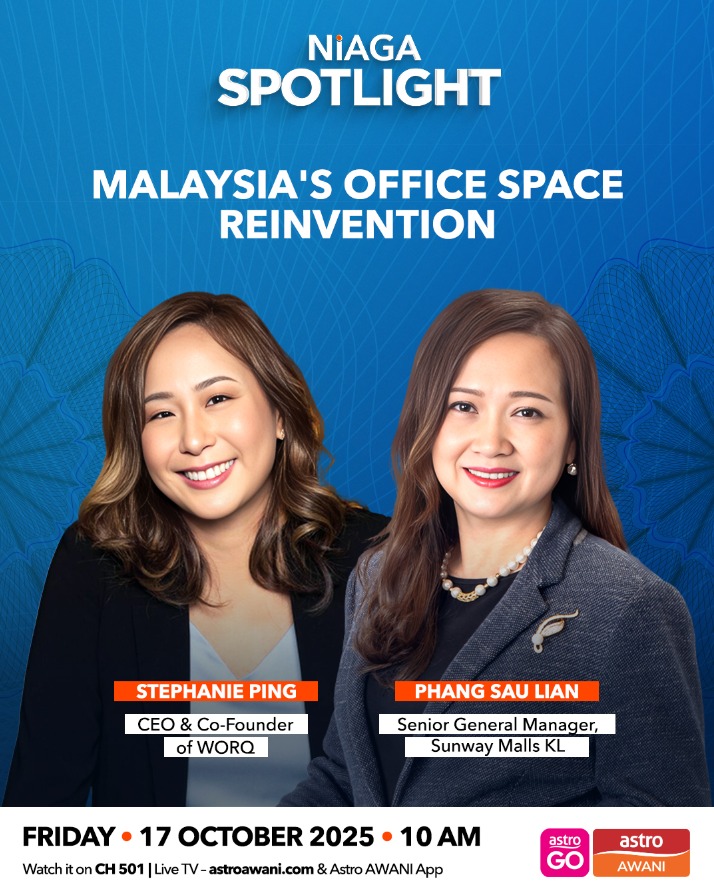
While headlines often point to a glut in office space, the reality on the ground tells a different story. According to Stephanie Ping, CEO and Co-founder of WORQ, the market is nowhere near a saturation point.
“We are only at about 1% penetration,” Ping noted, emphasizing that there is a long runway for growth. While the goal is to eventually expand into cities like Melaka and Ipoh, the current focus remains on Kuala Lumpur, where a massive appetite for flexible, high-quality spaces persists.
Currently, KL’s office vacancy has eased to approximately 19%, driven largely by a “flight to quality” as tenants abandon aging blocks for flexible, integrated environments.
The “Mall-Office” Synergy
Sunway Malls is at the forefront of this evolution, leveraging the integrated mall-office model to solve modern urban challenges. Phang Sau Lian, Senior General Manager of Sunway Malls, highlights that with mall vacancies hovering around 20%, repurposing underutilized space into co-working hubs is a strategic win.
By integrating co-working spaces, retailers gain access to a dedicated, “built-in” community of professionals who enter the building daily, providing a steady stream of customers for F&B outlets and services regardless of weekend shopping trends.
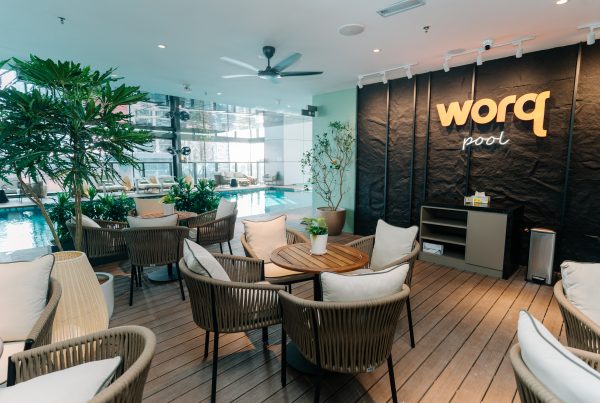
This shift reflects a broader lifestyle integration where malls are no longer viewed strictly as shopping destinations, but as essential “third spaces” where people can seamlessly transition between living, working, and decompressing.
The convenience of this model is further amplified by strategic connectivity, as these hubs are almost always anchored to major transport nodes like MRT and LRT stations. This ensures the daily commute is as frictionless as possible, making the mall-office hybrid a highly efficient solution for the modern urban workforce.
Operational Excellence: The “10-to-10” vs. “24/7” Challenge
Bridging the gap between a mall’s operating hours and a global workforce requires specialized SOPs. To ensure a seamless experience, WORQ and its mall partners have implemented:
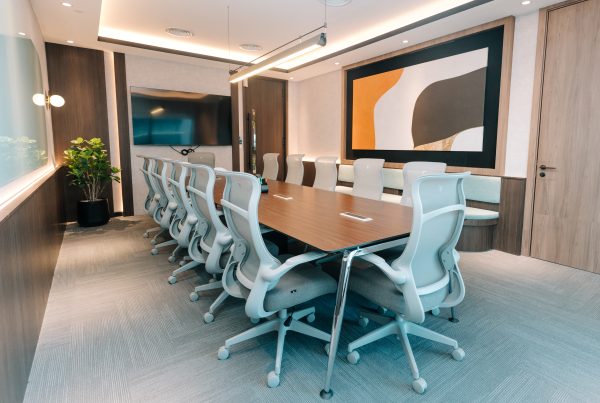
To ensure these hybrid hubs operate effectively, developers are implementing independent infrastructure that breaks away from traditional mall constraints. A key feature is the installation of dedicated air-conditioning units that operate independently of the mall’s central system, allowing the co-working space to run 24/7 even when the mall is closed.
This technical autonomy is paired with enhanced accessibility measures, such as dedicated parking zones and streamlined, secure access points specifically designed to accommodate the needs of night-shift workers and global teams.
Beyond physical logistics, the success of this model is underpinned by a shift in financial alignment through a revenue-sharing approach. This model ensures that both the landlord and the operator are equally incentivized to drive the space’s success, effectively moving away from the traditional, often rigid friction inherent in standard landlord-tenant relationships.
Because the workspace remains accessible and integrated, the transition from a high-pressure meeting to a moment of relaxation becomes effortless. As Phang Sau Lian notes, the true value lies in this immediate access to work-life balance.
“All the co-working members including entrepreneurs and professionals, they can find the work-life balance in using the space. This is because after work, they can just go down to the malls and decompress by watching a movie or go to karaoke,” says Phang.
Looking Ahead: 1 Million Square Feet by 2030
The roadmap is ambitious. With 450,000 square feet expected to be operational by the end of this year, the industry is targeting a milestone of 1 million square feet by 2030.
For landlords, the value proposition is clear: by partnering with flexible space operators, they aren’t just filling empty floors—they are increasing the “payback” of their assets and breathing new life into the retail ecosystem.
As featured on Astro AWANI on October 17th, 2025





 Enjoy exclusive wellness benefits with Atlas Chiropractic & Physiotherapy, supporting desk-bound professionals with evidence-based chiropractic and physiotherapy care.