
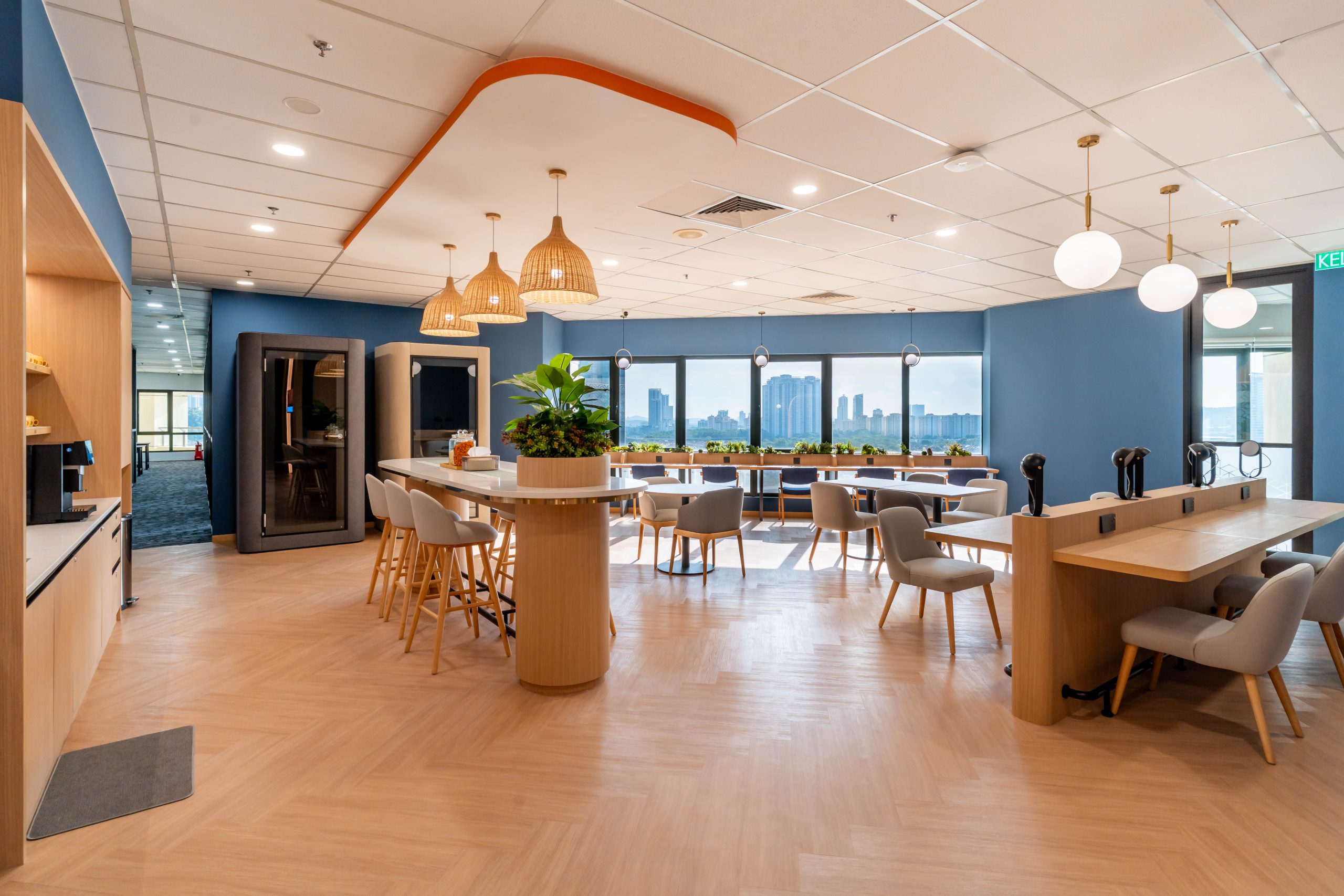
 What makes WORQ Bandar Utama unique is its focus on the people’s experience
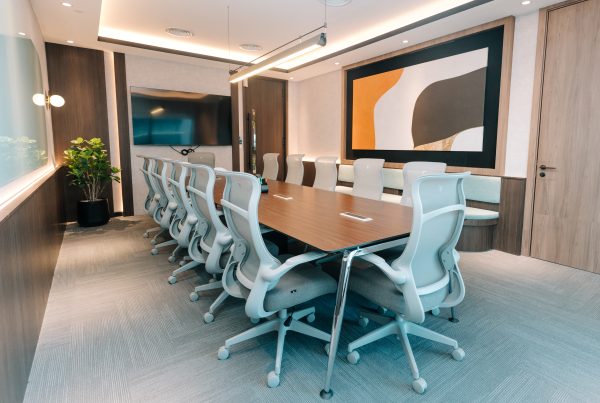
Co-working space provider WORQ is launching its 11th outlet on Sept 9. Occupying the entire Level 15 of KPMG Tower in Petaling Jaya, Selangor which spans 29,000 sq ft, WORQ Bandar Utama offers hot-desking spaces, meeting rooms, discussion rooms, al fresco workspaces, private phone booths and an event space.
Just like every other WORQ outlet, Bandar Utama’s will be situated near train stations — the Bandar Utama MRT station as well as the upcoming Bandar Utama LRT station. The latter is part of the LRT Shah Alam Line that is expected to begin operations at the end of the year.
In an exclusive interview with City & Country, WORQ co-founder and chief financial officer Andrew Yeow says, “Bandar Utama is actually the final piece of the puzzle that completes our transit-oriented co-working network. With the opening of WORQ Bandar Utama, all our locations will be connected to major train lines in the Klang Valley.
“With the upcoming LRT line running from Bandar Utama to Johan Setia, we see this opening up an entirely new corridor for residents from the eastern-western side of the Klang Valley, especially from Shah Alam and Klang, to have easy access to the city.”
At first glance, the new outlet may resemble other WORQ locations, but co-founder and CEO Stephanie Ping reveals there is more to it than meets the eye.
“What makes this outlet unique is that it carries the same core elements as our previous ones where it’s still transit-oriented and designed for productivity. But beyond that, this location will also focus heavily on the people’s experience,” he says.
Ping adds that WORQ Bandar Utama will offer several wellness facilities, including a games room, a potential massage area, a nursing room, napping pods by Sealy as well as outdoor sports areas.
“So we have four balconies here — one will serve as a lounge area, another will have a ping-pong table, the third will have a pickleball court and the last balcony will be a dedicated al fresco space.”
Demand for ‘people experience’
On why the co-working space provider decided to prioritise “people experience” for this outlet, Ping explains, “We started with a community-driven concept, designed mainly for entrepreneurs and SMEs (small and medium enterprises). Each of our sites became a kind of localised business hub. For example, Subang caters more to industrial, logistics and university-linked businesses, while Taman Tun Dr Ismail (TTDI) attracts tech companies, start-ups and digital nomads.
“But over time, larger enterprises and MNCs (multinational corporations) started using our spaces more often. Today, around 70% of our business comes from them. That shift means we’re now focusing heavily on employee wellness, or what we call the ‘people experience’.”
Ping further elaborates that for these companies, the key priorities are recruitment, retention, learning and development.
“So, we’re going beyond just providing furniture or amenities. We run employee engagement programmes like Friday team lunches, Monday morning breakfasts and training sessions, including AI workshops. We’re essentially translating what worked for entrepreneurs into solutions that boost employee well-being and productivity.
“Hence, we’ll be listening closely to our customers about what lifestyle elements they value most at this outlet. That feedback will shape how we roll out our new sub-brand, in a data-driven way, tailored to what people truly want. So while this location still sits under our main WORQ brand, it carries more lifestyle-driven elements and also acts as the testing ground for what will become the people’s experience sub-brand.”
Expanding the business
The new sub-brand, featuring more wellness-driven and upmarket offerings, will be unveiled in the first quarter of 2026. The first outlet of this sub-brand will be in KL Eco City, Kuala Lumpur.
Yeow adds that WORQ aims to open about 100,000 sq ft of space annually, and has several locations around the Klang Valley in mind for next year.
“Today, we have about 300,000 sq ft of space in the Klang Valley and I would say we’ve already connected most of its middle core. Our goal in the coming year is to extend that network further, so we have more locations in the pipeline. The ultimate goal is to get up to about one million sq ft in the Klang Valley [by 2030],” he says.
On growing WORQ’s business model, Ping says it is currently practising the model of strategic partnerships with landlords instead of the conventional leasing model. Concurring with Ping, Yeow adds that almost half of their newer outlets are running on this strategic partnership business model.
“When we partner with landlords, we get to know the building and their practices better. That way, we can enhance the overall experience not just for tenants but also for our own customers. Even down to smaller details like [the services provided by other tenants of our landlords], we can channel those to our clients and vice versa.
Similarly, at WORQ Bandar Utama, the duo has partnered with several tenants of KPMG Tower and 1 Utama Shopping Centre, such as Anytime Fitness, The Pickle Grounds and F&B outlets. Through these partnerships, Ping says WORQ members will get to enjoy special rates and discounts.
In terms of its outlook on how the co-working subsector has performed and will continue to perform, both say WORQ has seen quite a lot of growth, building on the momentum from last year.
Yeow explains, “We’ve been expanding to more sites, and demand has remained healthy. What we’ve noticed, though, is that due to global macro factors like US tariffs and general uncertainty, larger-ticket clients are being more cautious.
“There are really two parts to it. First, clients are becoming more cautious, so we see them shortening their tenancy, which actually works in our favour because we provide flexibility. The other is that for larger moves, companies are taking more time to plan. Malaysia, in a way, is fortunate because geopolitically we’re in a unique position and many companies are still looking to move operations here.
“We see firms diversifying from China, as well as Western companies setting up in Malaysia. On the ground, we notice interest from mainland Chinese firms, MNCs and Singaporean companies that already have offices there but are exploring KL for expansion.”
Ping adds, “Overall, demand is strong, but conversion is slower. Companies are still coming for tours and having discussions; it’s just the final decision-making that’s taking longer.”
As featured in The Edge Malaysia on September 18th, 2025





 Enjoy exclusive wellness benefits with Atlas Chiropractic & Physiotherapy, supporting desk-bound professionals with evidence-based chiropractic and physiotherapy care.