
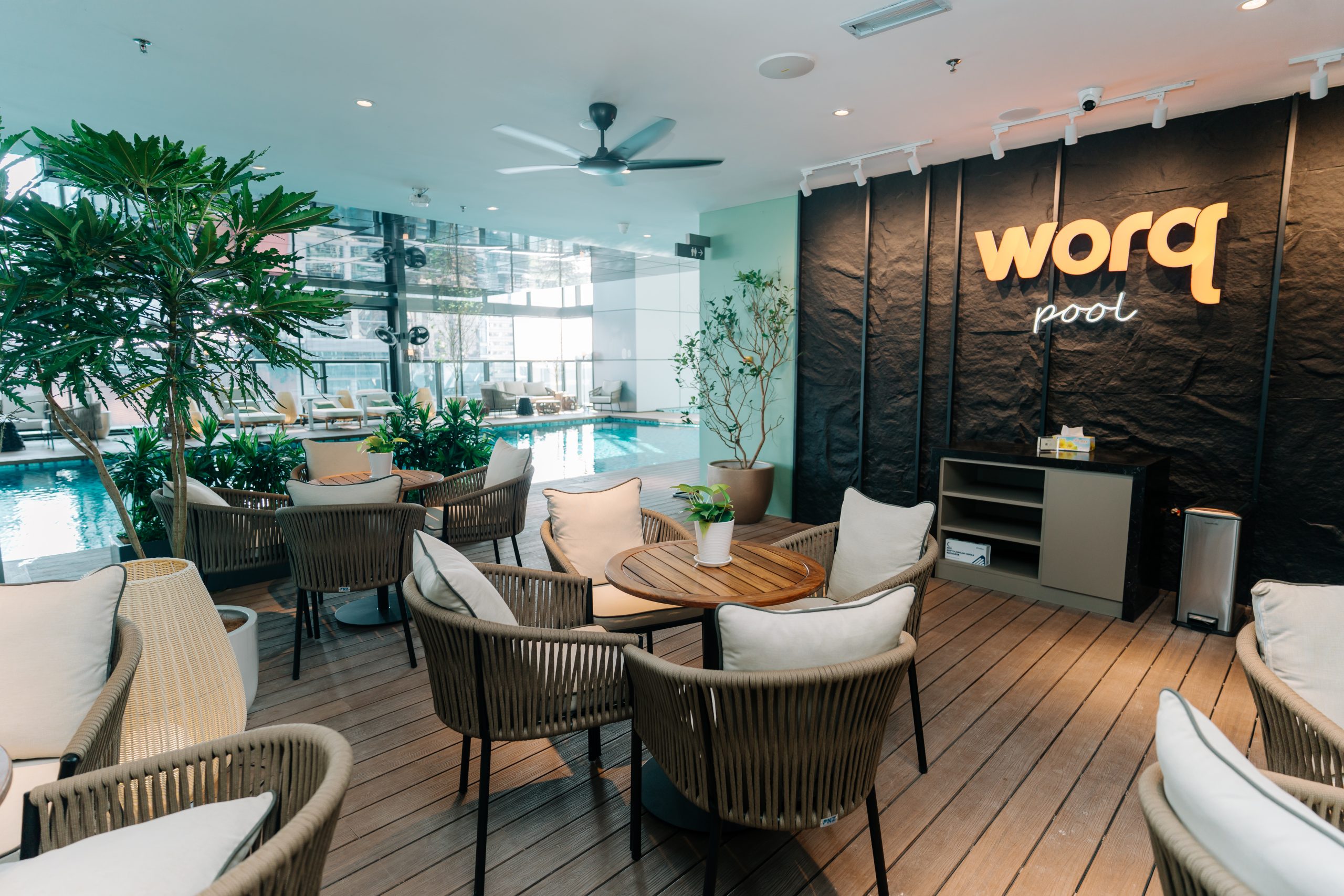
The Way Malaysians Work Is Evolving
The way Malaysians work is evolving. Offices are no longer just spaces to park employees; they are increasingly seen as strategic hubs for collaboration, talent attraction, and innovation.
Factors such as proximity to public transport and vibrant business districts, as well as office layouts that support both focused work and team interaction, are becoming just as important as floor area or prestige.
Districts like KL Eco City and Bangsar South in Kuala Lumpur — where transit, retail, F&B, and office space converge — have emerged as magnets for companies and coworking operators alike because they are perfectly suited to a younger and more mobile workforce that is shaping Malaysia’s commercial landscape.
On the other hand, price is no longer the main consideration for some companies, as ESG (environmental, social and governance) compliance drives demand for premium offices.
Bigger Companies Also Using Flexible Workspaces for Cost-Effective Scaling
Firstly, the market has observed more and more companies moving away from a single, centralised headquarters. Core offices remain, but flexible workspaces and satellite locations are increasingly part of the mix.
Expanding its appeal beyond small and medium enterprises (SMEs) and start-ups, multinational corporations (MNCs) such as Mastercard Asia and GlaxoSmithKline (GSK), alongside local firms like Malaysia PayGap, are embracing coworking spaces. This signals that flexibility and employee experience are now key considerations across organisations of different sizes.
“Larger corporations are now leveraging them for enterprise-level solutions, as well as accommodating headcount fluctuations,” says JLL Malaysia Strategy & Workplace senior consultant Timothy Wong.
“Flexible workspaces serve as a crucial, immediate solution, providing high-quality, scalable environments that eliminate the long lead times associated with sourcing and fitting out traditional office stock. This allows them to accommodate growth seamlessly,” he tells EdgeProp.
Wong notes that research in Commercial Real Estate (CRE) Trends to Watch in 2026 indicates headcount forecasting is becoming exceptionally challenging because of AI-driven job transformations and more volatile, project-based business cycles.
Wong believes the move from capex-heavy office fit-outs to an opex model represents one of the most profound shifts in corporate real estate strategy today.According to Wong, Malaysia is emerging as one of the Asia-Pacific’s standout growth leaders in flexible workspace adoption.
“KL and the Klang Valley are experiencing explosive demand from both global MNCs and local enterprises. This is driven by a compelling combination of cost-effectiveness compared to regional peers, a strong talent pool, and a multicultural, multilingual workforce,” he says.
Flexible Workspaces Supporting Growing Businesses
Concurring, WORQ co-founder and CEO Stephanie Ping shares:
“In our early days, the majority of our members were startups and SMEs. Today, a growing portion of our occupancy comes from enterprises and MNCs.”
Ping explains that the core operations of many of these companies remain at the main headquarters, while flexible workspaces act as satellite offices that allow companies to access a wider talent pool across different locations while maintaining speed and agility.
Meanwhile, Common Ground CEO Chris Edwards explains that flexible workspaces also allow companies the flexibility to manage risk while gauging the time it will take to hire talent, set up teams, and assess opportunities before committing long-term.
“Companies are keeping lean core offices in financial hubs while using smaller offices or flexible spaces in secondary cities. Overall, footprint decisions are being driven by cost optimisation, talent access, and flexibility rather than prestige alone,” he tells EdgeProp.
Coroboros Sdn Bhd co-founder (Chief of Automation) Abigail Enero Naidu says the flexibility and environment provided at WORQ Bandar Utama in Selangor has been a good match for Ooroboros’ work culture.
“As a creative automation technology company, much of our builds, deployments, and client fixes happened late at night. Back then, we didn’t have the budget or the need for a full office. WORQ was the only space we found that provided 24/7 access for all member types, and that made a huge difference for a small team trying to deliver big projects,” Abigail tells EdgeProp.
As the company grew, flexibility remained a valuable factor as it could scale seats up when a project ramped up and stay lean when things slowed down without being locked into long leases or fixed overheads.
Meanwhile, Air IT Group (KL) business operations head Mahen Moganathas, who uses the WORQ Subang outlet, says that when Air IT expanded into KL, its team needed a workspace that could scale without long setup timelines.
“As a managed service provider delivering IT and cybersecurity support, collaboration and responsiveness are critical. The layout and shared spaces make it easier for teams to problem-solve quickly and support one another effectively,” he explains.
“Flexible workspace allowed us to consolidate our growing team under one roof while maintaining operational efficiency. It has also given us a professional environment that supports our brand and enhances both employee engagement and customer confidence,” Mahen adds.
Premium-Grade Offices Attracting More Tenants
At the same time, tenants today are more willing to pay a bit more for a better environment, newer facilities, better image, and a more comfortable workplace for their staff, says PropNex Realty Sdn Bhd capital markets head Victor Lim.
“So naturally, Grade A buildings and green-certified offices are seeing stronger interest.”
“Over the past two years, occupiers have become much more selective and strategic. The flight-to-quality trend is very real, as companies are consolidating, upgrading, and prioritising better buildings rather than just taking up more space,” Lim tells EdgeProp.
He explains that most of his clients are corporates, including MNCs, tech companies, logistics firms, engineering companies, and regional headquarters setups. He also works closely with investors acquiring office buildings for long-term holding.
“For 2025 to 2026, occupiers are generally looking for practical and efficient spaces. Many prefer offices that are already fitted or partially fitted so they can move in faster and reduce renovation costs,” he says.
Companies are also looking for flexible layouts to support hybrid working, good accessibility for staff, buildings with green or ESG positioning, and a professional environment that reflects their brands.
Beyond ESG and green certifications, there is a growing shift towards WELL-certified offices across the market.
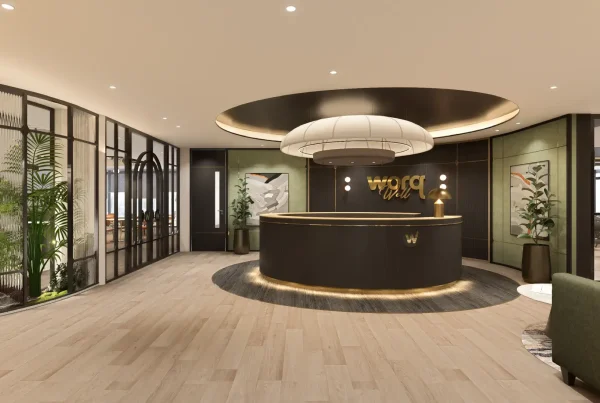
In the past six months, KL offices such as Menara Merdeka 118, JLL Malaysia headquarters in TRX, and WORQ Well in Aspire Tower, KL Eco City have received WELL certification, reflecting evolving workplace priorities.
Lim also points out that older offices will likely face more pressure moving forward, especially if they do not upgrade or reposition themselves.
“The gap between new and old buildings is becoming more obvious.
That said, older buildings are not completely out of the game. If they are well maintained, priced correctly, or refurbished, they can still attract tenants. But if nothing is done, vacancies may take longer to fill,” he adds.
Connectivity Shapes Workspace Choices
Lim adds that buildings connected to MRT or LRT lines, with Malaysia Digital Status or green certifications, tend to attract more serious enquiries.
Similarly, Ping says strategic location is a key appeal, noting that all WORQ Klang Valley outlets are located within transit-oriented developments with direct connectivity to major train lines.
Common Ground’s Edwards also agrees that the hub-and-spoke workforce model ensures employees work near their homes, saving commuting time and supporting talent retention.
Air IT’s Mahen adds that being situated in a well-connected, high-activity area in Subang makes commuting easier for his team while offering convenient access to amenities.
“This contributes to a more positive office experience and encourages employees to come in, particularly as we operate a 24/7 support model that requires accessibility and flexibility,” he says.
As featured in EdgeProp on March 12th, 2026





 Enjoy exclusive wellness benefits with Atlas Chiropractic & Physiotherapy, supporting desk-bound professionals with evidence-based chiropractic and physiotherapy care.