
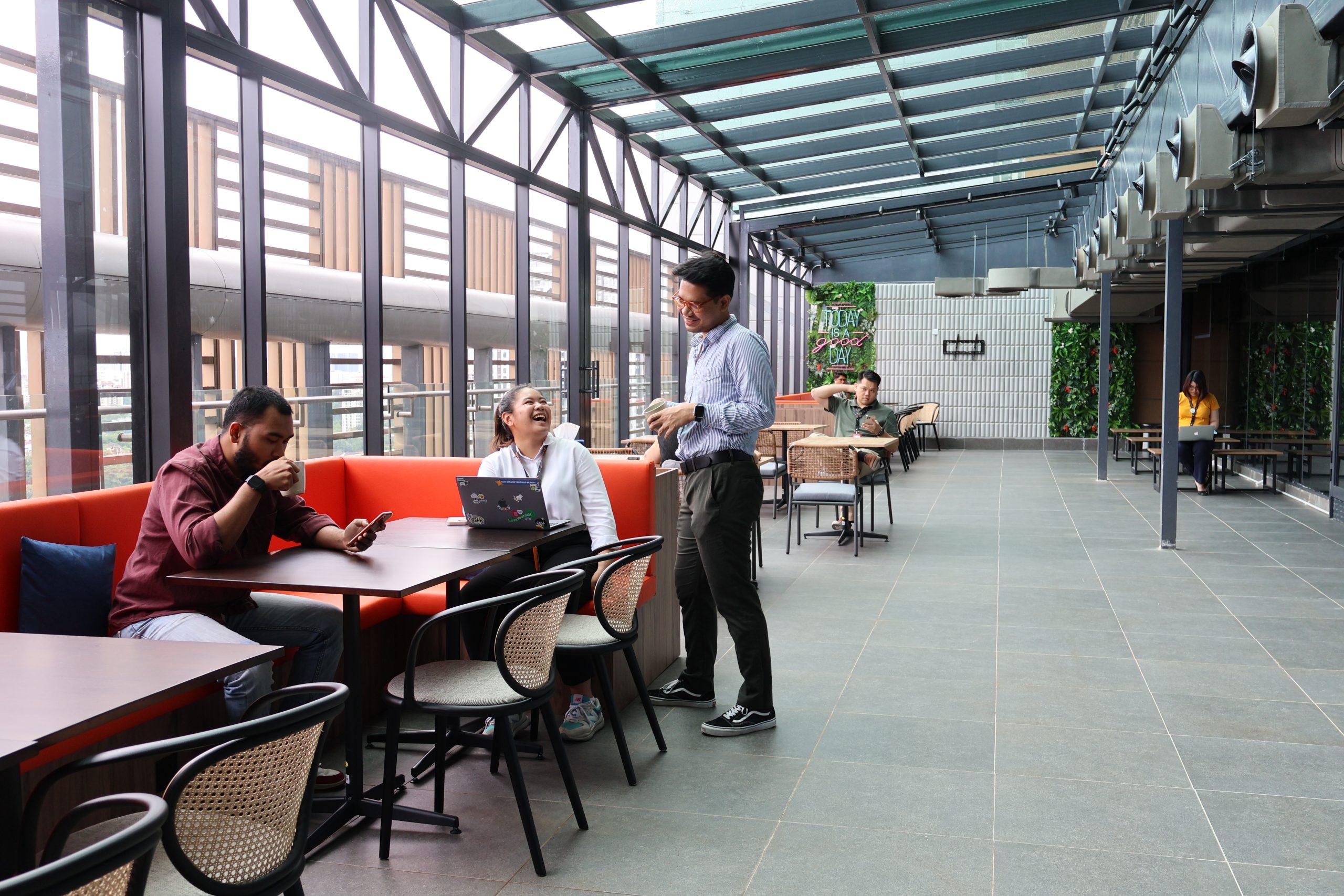
MALAYSIAN micro, small and medium enterprises (MSMEs) are increasingly downsizing their office footprints as rising operating costs, policy changes and evolving work practices push firms to reconsider the necessity of maintaining large, long-term office leases.
Rather than signaling retrenchment, industry players and policy-makers describe the trend as a recalibration of workspace needs, driven by cost discipline, digital adoption and a growing preference for flexibility. The shift is also reshaping demand patterns in the commercial property market, with flexible workspaces and coworking operators emerging as key beneficiaries.
Data from SME Corp Malaysia shows that cost pressures remain the dominant factor behind the change. Nearly 70% of respondents in the agency’s 2025 MSME survey cited escalating operating expenses as a major business challenge, prompting many firms to reduce fixed overheads, including office space.
“Rising business costs have consistently been one of the main challenges for MSMEs. As a result, we are seeing a trend towards smaller office footprints and more flexible workspace arrangements,” said SME Corp CEO Rizal Nainy.
Cost Pressures Intensify in 2025
Office overheads have become increasingly difficult to justify, particularly for micro enterprises and small firms with thin margins. Fixed expenses such as rent, utilities and maintenance continue to strain cash flow, while recent increases in electricity tariffs have further raised the cost of operating full-scale offices.
SME Corp added that electricity accounts for an average of 4.7% of MSMEs’ operating costs, but can reach as high as 35% for certain businesses. Rental costs average about 7% of expenses, though in some cases they can climb to 58%, underscoring the uneven burden faced by firms depending on sector and location.
Labour costs are adding another layer of pressure. Following revisions to the minimum wage, more than three-quarters of MSMEs expect labour expenses to rise by up to 20%. This has encouraged businesses to reassess staffing models and workspace requirements simultaneously.
“These pressures make long-term office leases and major renovations riskier, especially for smaller firms,” Rizal said, adding that policy changes in 2025, including tax and fuel subsidy reforms, have compounded cost uncertainty.
Against this backdrop, the agency’s March 2025 survey found that 74% of MSME respondents expect overall costs to increase this year, significantly higher than the 62.4% recorded in 2024. Electricity and rental expenses ranked among the top five cost components expected to drive operating cost increases.
Digitalisation Enables Smaller Offices
The move towards downsizing has been facilitated by a rapid acceleration in digital adoption among MSMEs. SME Corp’s surveys show that 80.6% of MSMEs had an online presence in 2023, up from 75.8% in 2021 and just 35.3% in 2019.
Digital channels such as websites, social media and e-commerce platforms have become central to business operations, allowing firms to reach customers and manage workflows without relying heavily on physical office space. Hybrid and remote work arrangements, supported by cloud computing and collaboration tools, have further reduced the need for large offices.
By 2025, 85.1% of MSMEs had digitalised their back-end operations, with many adopting advanced tools such as cloud-based systems and artificial intelligence (AI). These investments have enabled firms to maintain productivity with leaner physical setups.
“Hybrid or home-based work, especially in the services sector, allows MSMEs to streamline operations and cut overheads. However, businesses must balance cost savings with continued investment in growth areas such as research and development (R&D), market expansion and sales,” he told The Malaysian Reserve (TMR).
Hybrid Work Is Now Mainstream
Hybrid work models are increasingly viewed as a practical response to cost escalation rather than a temporary pandemic-era arrangement. A study by the Malaysian Employers Federation (MEF) found that more than 70% of companies now use flexible work arrangements, while 60% have increased remote work since the pandemic.
SME Corp observed that MSMEs are adopting hybrid setups to balance physical operations with digital workflows, reducing fixed expenses while preserving operational efficiency. Since 2022, the proportion of MSMEs willing to invest in information and communications technology rose from 37.9% to 60.7%, while investment in machinery increased from 49.2% to 69%.
“These trends show that MSMEs are actively restructuring how they operate,” Rizal said. “With greater technological adoption, firms are better positioned to leverage hybrid work models and optimise their workspace needs.”
To support the transition, the government has introduced various incentives. Under Budget 2025, employers will receive an additional 50% tax deduction on expenses related to capacity building and software for flexible work arrangements from January 2025 to December 2027. MSMEs with annual sales below RM1 million are also exempted from the 8% Sales and Services Tax (SST) on rental and leasing.
Coworking Gains Strategic Relevance
Coworking operator WORQ has observed a broadening of its client base, with demand no longer limited to start-ups and small businesses. Co-founder and CEO Stephanie Ping said the shift towards flexible workspaces has accelerated since 2022, driven by companies seeking capital expenditure (capex)-light, scalable solutions.
“Coworking is increasingly viewed as an essential component of real estate planning rather than a niche option. Many organisations are adopting a ‘core and flex’ strategy, retaining a smaller main office while using coworking spaces for expansion, project teams or distributed staff,” she told TMR.
WORQ has seen strong demand for private suites that offer secure, branded environments without the cost and complexity of traditional leases. Hybrid arrangements, combining private offices with hot desks or flexible access, are also common as firms adapt to varied attendance patterns.

Stephanie Ping, CEO of WORQ
According to Ping, employee experience has become a decisive factor. “Companies want locations closer to where employees live and accessible by public transport,” she said, adding that transit-oriented coworking hubs support talent attraction and retention.
Similar trends are evident at Co Labs Coworking, a subsidiary of Paramount Corp Bhd. Its deputy chairman and ED Benjamin Teo Jong Hian said coworking demand has expanded significantly beyond its traditional SME and start-up base.
“When we started in 2017, coworking was largely associated with freelancers and small start-ups. Today, we are seeing much stronger adoption from mid-sized companies, corporates and multinational corporations (MNC),” he said.
Co Labs currently operates eight centres across the Klang Valley, managing about 186,000 sq ft (17,280ha) of space, with two additional locations in the pipeline. By the first quarter (Q1) of next year, total managed space is expected to reach 220,000 sq ft across 10 centres.
Teo said approximately 40% of Co Labs’ tenant mix now comprises corporate and MNC clients, up from around 20% before the pandemic. These anchor tenants typically occupy larger private suites accommodating between 20 and 100 employees.
“The pandemic was a major inflection point,” he said. “Post-Covid, many companies are reluctant to commit to traditional three- or six-year leases due to economic volatility. A turnkey, asset-light approach reduces capex and balance sheet risk.”
Memberships at Co Labs typically range from six months to two years, offering businesses greater flexibility compared with conventional leases. Pricing is structured per desk, allowing companies to scale space usage up or down in line with headcount changes.
Structural Shift, Not Downsizing
Industry players are careful to characterise the trend as optimisation rather than contraction. Teo said many companies are not downsizing in absolute terms, but reallocating space to better match usage patterns.
“Traditional offices are often underutilised in the early years of a lease,” he said. “Flexible workspaces eliminate that inefficiency by allowing firms to take only what they need at any given time.”
WORQ echoed this view, noting that coworking spaces are increasingly used as primary offices rather than supplementary locations. Demand remains strongest in transit-oriented developments, where accessibility is seen as a competitive advantage.
Both operators believe the flexible workspace segment has significant room to grow. Coworking and serviced offices currently account for only about 2% to 3% of total office supply in the Klang Valley, compared to close to 10% in more mature markets such as Singapore and parts of Europe.
As featured on The Malaysian Reserve on February 27th, 2026



 Enjoy exclusive wellness benefits with Atlas Chiropractic & Physiotherapy, supporting desk-bound professionals with evidence-based chiropractic and physiotherapy care.