
The Limits of a Traditional Office to Rent
When many entrepreneurs begin searching for an office to rent in Kuala Lumpur, they picture a sleek corporate tower with polished lobbies and long-term stability. But the reality is far less glamorous — especially for startups and solopreneurs.
Traditional offices come with steep hidden costs:
- Deposits: landlords typically ask for 3–6 months upfront.
- Fit-out & renovation: RM200–400 per sq ft on average.
- Furniture & cabling: another six-figure bill.
For a small startup, these numbers are crippling. SMEs in Malaysia already operate with lean cash flow, and burning precious capital on fit-outs or deposits can put them in financial danger before they’ve even launched their product. According to SME Corp Malaysia, 20% of startups fail within the first year and 60% within the first three years — poor cost management and lack of networks are leading causes.
This is why traditional office rentals often accelerate failure, rather than prevent it.
Shared Private Offices: Privacy Without Losing Community
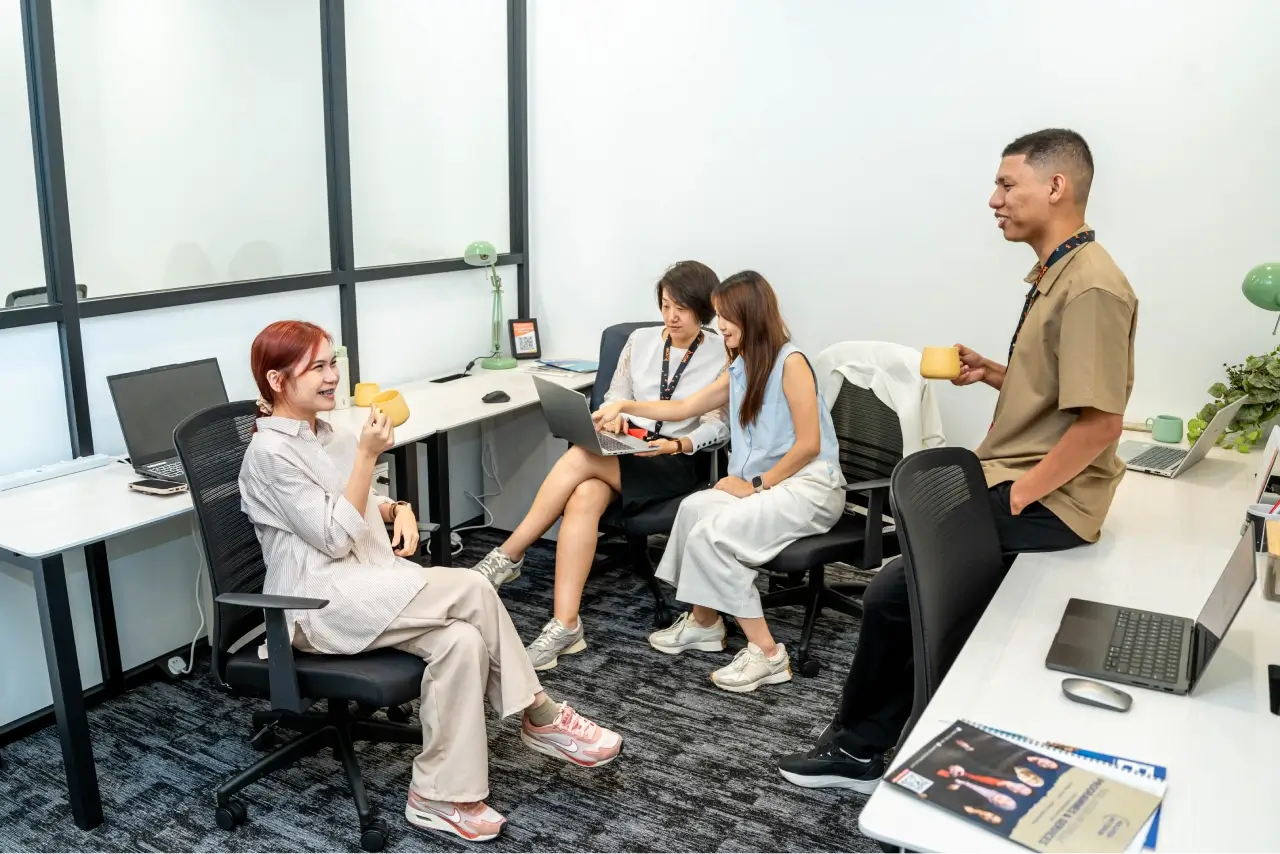
Coworking spaces became popular globally for freelancers and startups, but some entrepreneurs worried about a lack of privacy. That’s where shared private offices like WORQ step in — combining the exclusivity of a private office with the vibrancy of a coworking community.
For startups, this model solves two problems at once:
- Privacy to operate professionally with secure rooms, your own keys, and branding flexibility.
- Community on demand, where stepping outside your office door leads to networking opportunities, shared learning, and even new clients.
This balance makes WORQ’s private offices especially appealing. Entrepreneurs don’t feel isolated in a closed-off unit, but they also aren’t stuck in noisy hot desk areas when they need focus.
Built-In Support Systems for Entrepreneurs
Running a startup is often lonely. Founders juggle roles as marketer, accountant, salesperson, and HR manager — with little time for reflection or networking. Having an office to rent isn’t enough; they need a support ecosystem.
That’s why WORQ integrates community-driven programming:
- HRDF-certified training workshops to upskill teams.
- Networking events and SME roundtables to build valuable connections.
- Peer learning opportunities where solopreneurs can collaborate.
The data reinforces this. LinkedIn research shows 85% of business opportunities come through networking. Locally, SME Corp reports that SMEs engaged in peer communities are 30% more likely to scale within three years compared to those operating in isolation.
By choosing a shared private office at WORQ, startups tap into these networks naturally — something no traditional lease can offer.
Flexibility That Matches Startup Growth
Startups rarely grow in a straight line. Some months bring explosive client demand; others demand belt-tightening. A traditional office to rent doesn’t reflect that reality — it locks businesses into rigid square footage for years.
WORQ flips the model:
- No CAPEX: move in immediately, no renovations required.
- Predictable OPEX: a monthly fee covers rent, WiFi, utilities, cleaning, and pantry.
- Scalability: add desks, rooms, or even entire suites as you grow.
Globally, this flexibility is now a corporate priority. CBRE’s 2023 Asia Pacific Occupier Survey found that 60% of companies plan to increase their use of flexible office solutions, while JLL’s Flex Space Report confirmed that 43% of corporates see flexible space as part of their long-term real estate strategy.
If MNCs are embracing flexible corporate offices, startups stand to gain even more — agility is survival.
Wellness and Productivity Built Into the Workspace
Startups succeed or fail based on their people. But a stressful, poorly designed office can sap morale and productivity. Cushman & Wakefield reports that companies investing in employee experience see up to 12% lower attrition.
WORQ makes this tangible with wellness-focused amenities across its outlets:
- TT Racing ergonomic chairs that support long workdays.
- Sealy napping pods at Bandar Utama for restorative breaks.
- Massage chairs and wellness corners for stress relief.
- Sky terraces, lounges, and breakout areas for collaboration.
- Transit connectivity with MRT/LRT stations nearby, reducing commute fatigue.
For entrepreneurs, these aren’t luxuries — they’re productivity tools. A small team that feels energized and supported will consistently outperform one stuck in a barebones rented office.
Case Example: From Solopreneur to Scaling SME
Consider a local fintech founder who started out alone, working from cafés and occasionally hot desks. As client projects grew, she needed a more professional setting to meet investors and onboard two employees. A traditional office to rent required deposits she couldn’t afford, plus months of fit-out.
Instead, she moved into a WORQ private office. Within a week, she had:
- A lockable private office branded with her company logo.
- Access to shared meeting rooms for client presentations.
- Networking opportunities that connected her to a legal consultant and potential investor.
- Scalable terms — adding a third desk as the team expanded.
Two years later, that company has grown to 20 staff, still housed within WORQ — but now in a larger suite. The founder credits the move for saving her over RM200,000 in CAPEX, while also giving her credibility with clients and investors.
This kind of transition story is common among WORQ members, illustrating why shared private offices aren’t just convenient — they’re strategic.
Why Community-Driven Private Offices Are the Smarter ‘Office to Rent’
For entrepreneurs and solopreneurs, the phrase “office to rent” often conjures images of empty rooms and landlord negotiations. But today, the smarter option is an environment that fuels growth, not drains resources.
With WORQ’s shared private offices, startups gain:
- Privacy for professional operations.
- Community for networking and growth.
- Flexibility to match unpredictable startup trajectories.
- Wellness features to keep teams motivated.
- Enterprise-grade facilities without enterprise-level leases.
As startups in Malaysia continue to navigate uncertainty, one truth remains constant: survival depends on agility, networks, and efficiency. Shared private offices provide all three — turning the simple act of renting space into a catalyst for thriving.



 Enjoy exclusive wellness benefits with Atlas Chiropractic & Physiotherapy, supporting desk-bound professionals with evidence-based chiropractic and physiotherapy care.