

Coworking Near Me: Why CEOs and CFOs Are Rethinking Flexible Workspaces
The Executive Lens on Coworking
For CEOs and CFOs, coworking has shifted from a startup trend to a strategic part of corporate real estate. It is no longer just about hot desks or freelancers; it’s about risk management, scalability, and cost efficiency. When decision-makers type “coworking near me” into Google, they’re not simply searching for convenience. They are evaluating which provider can serve as a long-term partner for their enterprise strategy.
At WORQ, we position our model not only as a coworking hub but also as a private office coworking space solution that aligns with enterprise requirements. From OPEX-based financial models to Grade A infrastructure, WORQ addresses the questions CFOs and real estate directors ask: How fast can we scale? What risks do we eliminate? How do we maintain credibility with clients and employees?
WORQ vs Others: A Comparative Framework
The Kuala Lumpur coworking market is diverse. Some providers are boutique, some aesthetic-driven, others declining in relevance. For clarity, we present a coworking space comparison using anonymised labels: Provider A, Provider B, and Provider C. This highlights structural differences without reducing the analysis to branding.
Comparison: WORQ vs Other KL Providers
| Criteria | WORQ (KL Coworking & Private Offices) | Provider A | Provider B | Provider C |
| Location & Access | Multiple hubs, MRT/LRT integrated, prime KL addresses | Limited access; weaker connectivity | Central but less convenient for commuters | Used to be strategic, but no longer attractive |
| Space Design | Balance of private office coworking space, hot desks & event halls | Smaller footprint, boutique focus | Aesthetic but less functional for teams | Dated design, less adaptable |
| Enterprise Amenities | HRDF-ready training rooms, event spaces, ergonomic setups, enterprise Wi-Fi | Minimal | Event space small-scale | Adequate but ageing |
| Cost Transparency | OPEX-based, no CAPEX, bundled utilities | Hidden add-ons for meeting rooms/utilities | Premium pricing with inconsistent value | Declining value proposition |
| Community & Network | Community-driven workspace, curated SMEs & corporates | Small, niche-focused | Surface-level engagement | Weakening engagement |
| Flexibility & Scale | Multi-location hub-and-spoke model, easy scale up/down | Rigid contracts | Limited scalability | Less relevant for growing firms |
This table illustrates what executives often discover: plenty of providers offer desks, but only a few deliver enterprise-ready coworking that integrates with business strategy.
Financial Lens: CAPEX vs OPEX
From a CFO’s perspective, the biggest shift coworking brings is financial. Traditional leases in KL often require six-figure CAPEX for fit-outs, plus multi-year liabilities. WORQ eliminates these burdens by packaging fit-out, utilities, IT, and support into an OPEX model. The coworking cost efficiency means predictable monthly costs, faster deployment, and reduced financial risk.
Competitors often present attractive aesthetics but still charge add-ons for meeting rooms, utilities, or event space. By contrast, WORQ’s bundled pricing ensures CFOs can forecast with confidence.
Enterprise Readiness: Why CEOs Choose WORQ
For CEOs, credibility with clients, staff, and investors is paramount. A Grade A coworking KL address in hubs like KL Sentral, Subang, or Bandar Utama signal’s reliability. WORQ’s mix of private offices, enterprise IT, and event spaces ensures leadership teams can host board meetings or town halls without leaving the building.
Providers like R and C focus heavily on aesthetics or niche positioning, which may appeal to freelancers but fall short for corporates. WORQ’s offering addresses both functionality and image, the balance CEOs demand.
Community-Driven Differentiation
A key distinction is WORQ’s community-driven workspace ethos. Unlike Provider R, which focuses on boutique users, or Provider C, which emphasizes aesthetics, WORQ builds curated communities of SMEs, corporates, and solopreneurs. This is not incidental but deliberate: many clients report that networking and peer learning at WORQ generate as much value as the physical space itself.
Provider K, once strong in community engagement, has seen diminishing activity. This underscores the difficulty of sustaining ecosystems, a challenge WORQ meets through HRDF-ready event spaces and active ecosystem management.
Flexibility in Scale and Portfolio Strategy
CFOs and real estate directors increasingly adopt hub-and-spoke models, balancing a central HQ with satellite offices. WORQ enables this with multiple hubs across Klang Valley, each transit-connected. Teams can deploy at one hub and later expand across locations seamlessly.
Providers R and C typically operate single or limited sites, restricting scalability. Provider K’s relevance has waned with its static location. WORQ’s flexible office Kuala Lumpur approach aligns directly with portfolio strategies that prioritise resilience.
Why WORQ Stands Out in the Comparison
When stripped of branding, the structural differences are clear:
- WORQ provides enterprise coworking KL designed for CEOs and CFOs.
- Competitors either skew boutique, aesthetic, or legacy, with limited enterprise appeal.
- WORQ’s financial model, location strategy, and community ethos support business outcomes directly.
This is why more enterprises searching for “coworking near me” end up choosing WORQ. The model is not merely convenient; it is corporate-ready.
The Bottom Line for Decision-Makers
For CEOs and CFOs, coworking is no longer peripheral; it is core to real estate strategy. The choice ultimately hinges on whether a provider offers resilience, cost transparency, and professional credibility.
In Kuala Lumpur, WORQ delivers these outcomes consistently. It is more than a coworking space comparison winner, it is a platform for enterprises to scale, adapt, and thrive.



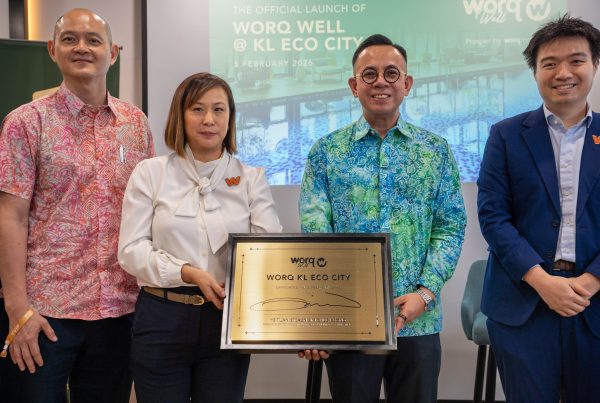

 Enjoy exclusive wellness benefits with Atlas Chiropractic & Physiotherapy, supporting desk-bound professionals with evidence-based chiropractic and physiotherapy care.